SVARNA
Semantics, Variation And Reasoning in Neural-symbolic Architectures
Semantics, Variation And Reasoning in Neural-symbolic Architectures
interactive
The sentence «Κάθε φοιτητής διαβάζει ένα βιβλίο» (every student reads a book) is shown as the lab analyses it: as dependencies, as types, as a growing Dynamic Syntax tree, and as a proof. Each analysis is embedded so that distances in the vector space reproduce distances in the tree, and is then passed to a neural encoder. Hover a node to follow it through all three stages.
Bridging theoretical linguistics, computational methods, and neural-symbolic AI to advance language technology
Combining the scalability of neural models with the interpretability of symbolic reasoning
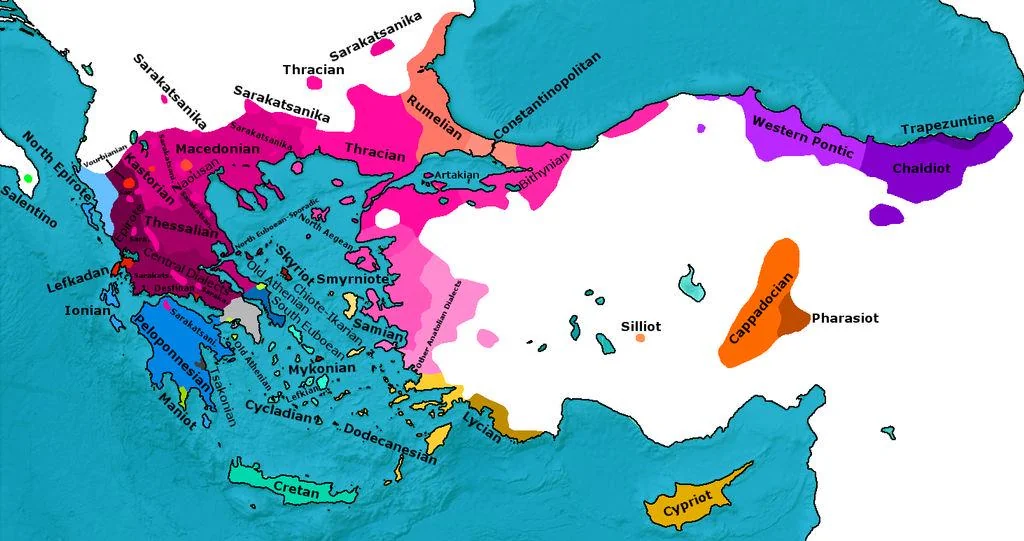
Resources and models for Modern Greek and its regional varieties
Formal semantics with proof assistants and computational implementation
Computational methods for literary analysis and cultural heritage
Research on reasoning capabilities, evaluation, and applications of LLMs
SVARNA is the independent computational linguistics lab led by Dr Stergios Chatzikyriakidis, uniquely positioned at the intersection of theoretical linguistics, computer science, and cognitive science.
SVARNA specializes in NLP and linguistically informed neural-symbolic AI, bringing formal linguistic rigor to modern computational approaches. We believe that deep theoretical understanding enhances machine learning systems, particularly for under-resourced languages and complex semantic phenomena.
We maintain active research programs in Greek NLP resources, natural language inference with proof assistants, linguistic distance studies, and digital humanities applications. The lab is led by Dr Stergios Chatzikyriakidis and collaborates extensively with leading institutions.
Highlighting recent achievements at the intersection of linguistic theory and computation
First multi-label NLI dataset accounting for semantic ambiguity. 1,762 inference pairs with 6,896 word senses. Published at Findings of EACL 2024.
Cambridge Elements in Semantics. Comprehensive treatment of type-theoretical approaches to natural language semantics, bridging formal linguistics and computational implementation.
Combining retrieval-augmented generation with formal verification for modern Greek interwar poetry. Published at NLP4DH 2025 (NAACL).
"We believe that symbolic and neural computation are complementary, not competing approaches. The symbolic provides the precision and interpretability that pure machine learning lacks, while neural models offer the scalability and robustness that symbolic systems need. Our work aims at the synthesis of these approaches, developing systems that are both powerful and explainable, in effect systems with properties essential for building AI we can trust."
SVARNA Research Statement
We welcome graduate students, postdocs, and collaborators interested in computational linguistics, NLP, and language technology at the intersection of theory and practice.